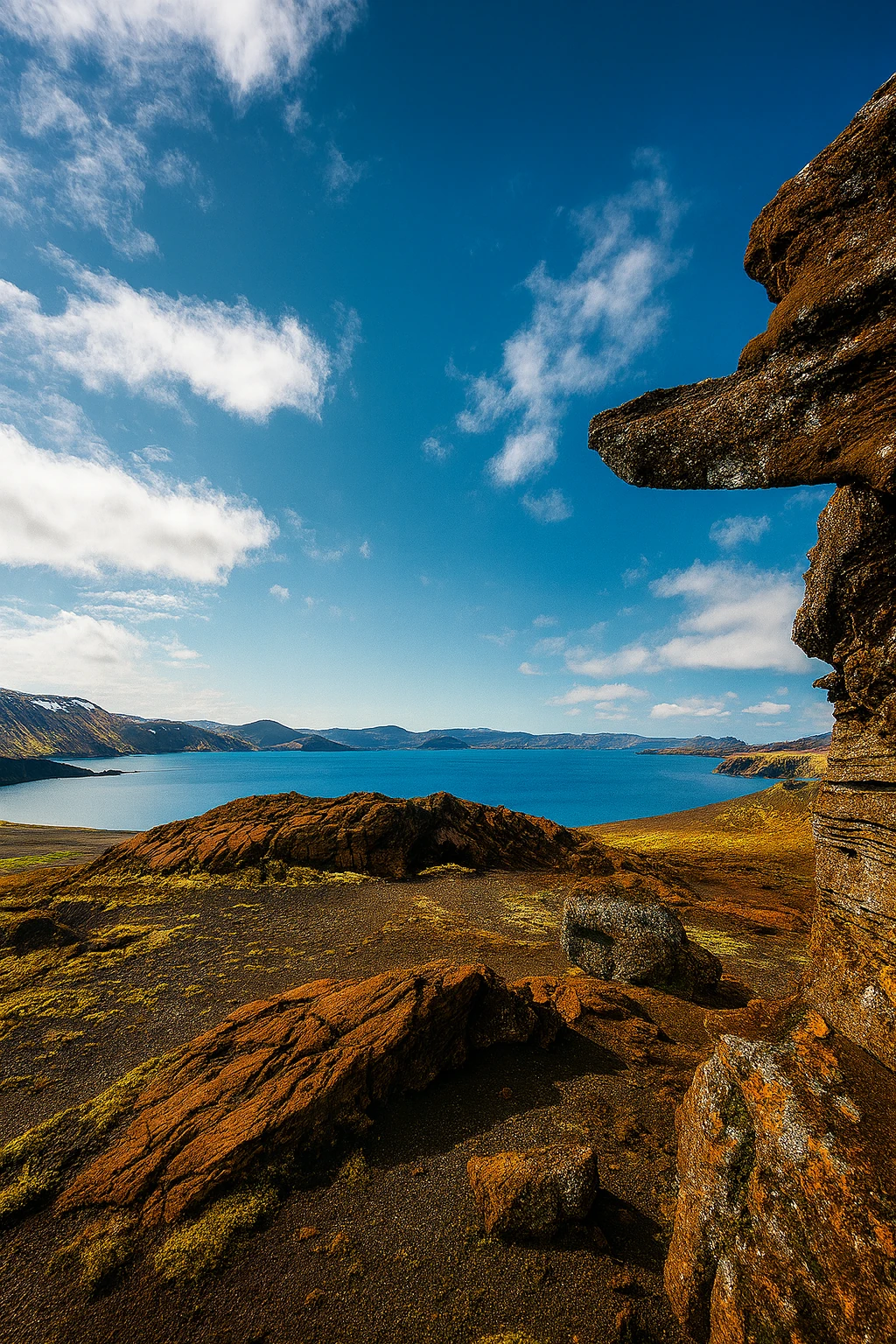
Lake Kleifarvatn is a large inland lake in southwest Iceland, located on the Reykjanes Peninsula. The area is known for tectonic movement, geothermal activity, and volcanic terrain.
The entire region sits on the Mid-Atlantic Ridge, where the North American and Eurasian tectonic plates move apart.
This slow movement explains the earthquakes, volcanic eruptions, and geothermal areas found nearby. The lake basin itself formed as a result of this tectonic activity.
The lake is often included on Reykjanes sightseeing routes because it is easy to access and closely connected to the geological processes that shape the peninsula.
It is not a recreational lake in the traditional sense.
Its value lies in what it shows about Iceland’s landscape.
Location
Kleifarvatn lies near the center of the Reykjanes Peninsula, roughly one hour from Reykjavík by car.
size
The lake covers 9.1 square kilometers and reaches a depth of 97 meters, making it one of the deeper lakes in Iceland.
Geological Setting
Lake Kleifarvatn has no visible rivers flowing into or out of it. Water enters and exits through porous lava rock beneath the surface.
Access, Diving, and Nearby Attractions
Lake Kleifarvatn is accessible by road year-round, though conditions change with the seasons.
In summer, roads are usually clear and daylight is long.
In winter, snow, ice, and limited daylight require careful planning.
There are no facilities directly at the lake.
Visitors should bring food, water, and appropriate clothing.
Scuba diving is possible but limited.
Divers report geothermal bubbles, temperature changes, and reduced visibility.
Experience and proper equipment are required.
Many visitors combine a stop at the lake with other Reykjanes locations, including geothermal fields, volcanic craters, coastal villages, and the Blue Lagoon.
The contrast between an unmanaged natural lake and a developed geothermal spa highlights different ways geothermal energy appears in Iceland.
Water Conditions and Natural Systems
The water at Lake Kleifarvatn is dark due to volcanic sediment and geothermal minerals. Visibility decreases quickly with depth.
Unlike glacial lakes, the water chemistry here reflects ongoing interaction with heated rock below the surface.
Despite the lack of rivers, fish populations exist.
This confirms that groundwater flow is enough to support aquatic life.
Fishing has taken place at the lake for many years, though conditions vary by season.
Earthquakes and Changes to the Lake
In the year 2000, an earthquake occurred directly beneath the lake.
The effects were well documented:
- The water level dropped by more than 20 percent.
- Parts of the lakebed became visible.
- Cracks opened beneath the surface.
Soon after, new hot springs appeared along sections of the shoreline. Although the water level later rose again, the structure of the lake changed.
This event showed how closely surface water in the area is tied to seismic activity.
Lake Lleifarvatn is now often referenced in studies about groundwater movement and earthquakes in volcanic regions.
For visitors exploring the Reykjanes Peninsula, the lake offers clear insight into the processes shaping southwest Iceland, without requiring long hikes or technical access. It remains one of the key natural reference points in the region.
Geothermal Features, Folklore, and Literature
Several geothermal areas lie close to the lake.
These include steam vents, hot springs, mud pools, and lava fields.
The proximity of these features makes the lake a useful reference point for understanding how heat and water interact underground.
Local folklore adds another layer of interest.
Stories describe a large creature living in the depths of the lake.
Similar legends exist elsewhere in Iceland and are part of oral tradition.
The lake also appears in modern literature.
After the 2000 earthquake, author Arnaldur Indriðason set a crime novel here.
In English, the book is known as The Draining Lake.
The story begins when falling water levels reveal a body hidden beneath the surface, linking fiction directly to real events at lake Kleifarvatn.